Discover beauty with our exclusive discounts!

How to Choose Ocean Wall Art for Your Living Room: A Complete Guide
Transform your living room with ocean wall art. Expert tips on choosing size, style, framing, and placement to create a serene, sophisticated space.
Mike Markovina
10/7/202510 min read
How to Choose Ocean Wall Art for Your Living Room: A Complete Guide
The ocean has a magnetic quality that draws us in. The way light sparkles on the water, the waves seamlessly folding into one another, and the calm power of an endless horizon all create a sense of allure. Incorporating that energy into your living room goes beyond mere decoration; it’s about crafting a space that feels alive and provides a refuge from the chaos of everyday life.
Selecting ocean-themed wall art for your living room is both a thoughtful and personal journey. The perfect piece doesn’t merely occupy a wall; it changes the atmosphere of the room, infusing it with timeless beauty. Whether you’re captivated by the drama of turbulent waves, the serene nature of calm waters, or the intricate life beneath the surface, ocean art creates a connection to something greater than ourselves.
At WallArtsy, we recognize this connection. Our collection of coastal and ocean photography prints captures the raw, unfiltered beauty of the sea, printed on museum-quality materials that honor every detail.
Why Ocean Wall Art Belongs in Your Living Room
Beyond their aesthetic appeal, there is scientific evidence explaining why images of the ocean resonate so deeply with us. Research in environmental psychology indicates that viewing water imagery activates the brain's reward centers, which helps reduce cortisol levels and promotes a sense of calm. This explains why we feel instantly more relaxed when gazing at the sea and why incorporating such elements into our most-used spaces is a natural choice.
From a design perspective, ocean-themed wall art offers remarkable versatility:
Colour without overwhelm. The natural palette of ocean-inspired art, deep blues, seafoam greens, soft grays, and sandy beiges, introduces colour in an organic way rather than feeling forced. These tones can serve as both statement colours and neutral anchors, depending on your existing décor.
Spatial expansion. Horizontal seascapes create a visual effect that makes rooms feel wider and more open. There is an optical psychology at play: horizon lines draw the eye outward, creating the illusion of depth and space even in small living rooms.
Style flexibility. Ocean art seamlessly bridges design aesthetics. A minimalist black and white photograph of waves feels at home in a Scandinavian-inspired space, while a vibrant coastal sunset enhances bohemian or eclectic interiors. Whether modern, traditional, coastal, or industrial, ocean art adapts beautifully.
The key is understanding that you're not just selecting décor; you're choosing the emotional baseline for your living room.
Getting Size and Placement Right
The most beautiful print in the world loses impact if it's improperly sized or awkwardly placed. Here's how to nail the fundamentals:
The Two-Thirds Rule. Your artwork should be about two-thirds the width of the furniture it hangs above. For example, if you have a 90-inch sofa, aim for an artwork piece (or arrangement) that measures around 60 inches wide. This approach helps create visual balance in the space, ensuring it doesn’t feel overcrowded or too sparse.
Eye Level Hanging. The center of your artwork should be positioned at a height of 57 to 60 inches from the floor, which is the average eye level of a standing person. This ensures comfortable viewing whether you are sitting or walking through the space. In rooms where people usually sit, such as a conversation-focused living room, you might consider lowering this height slightly to 54 to 56 inches for better sightlines.
The Statement Piece vs. Gallery Wall Debate. A large ocean print, measuring 36x48 inches or larger, immediately draws attention and serves as a powerful focal point. This approach is bold and straightforward to execute effectively. On the other hand, a gallery wall offers greater storytelling possibilities. You can showcase various perspectives of the ocean, combine black-and-white images with colour, or create a narrative that takes viewers from the shore to the depths of the sea. However, designing a gallery wall requires more thought and planning. You'll need to ensure consistent spacing between frames (typically 2 to 3 inches), maintain a cohesive colour scheme, and arrange the pieces thoughtfully before committing them to the wall.
Orientation Strategy. Consider the proportions of your walls. Long, low walls above sectionals or media consoles are ideal for horizontal panoramic prints that highlight the vastness of the ocean. In contrast, narrow walls beside windows or in tight corners work best with vertical compositions, such as dramatic perspectives of lighthouses or underwater scenes that draw the eye upward.
At WallArtsy, our ocean photography prints come in multiple size options, allowing you to scale the piece perfectly to your space without compromising image quality.
Defining Style and Mood Through Your Selection
This is where ocean wall art goes beyond mere decoration and transforms into fine art. Fine art photography does not just document what exists, it interprets, evokes, and invites you into a feeling or moment that lingers long after you have looked away.
Photographic Realism. These prints make you feel as if you could reach out and touch the water. With crisp details and true-to-life colours, they capture the precise moment when a wave crests before breaking. Photographic realism works beautifully in spaces where you want the ocean to feel like a window—an escape route from wherever you are.
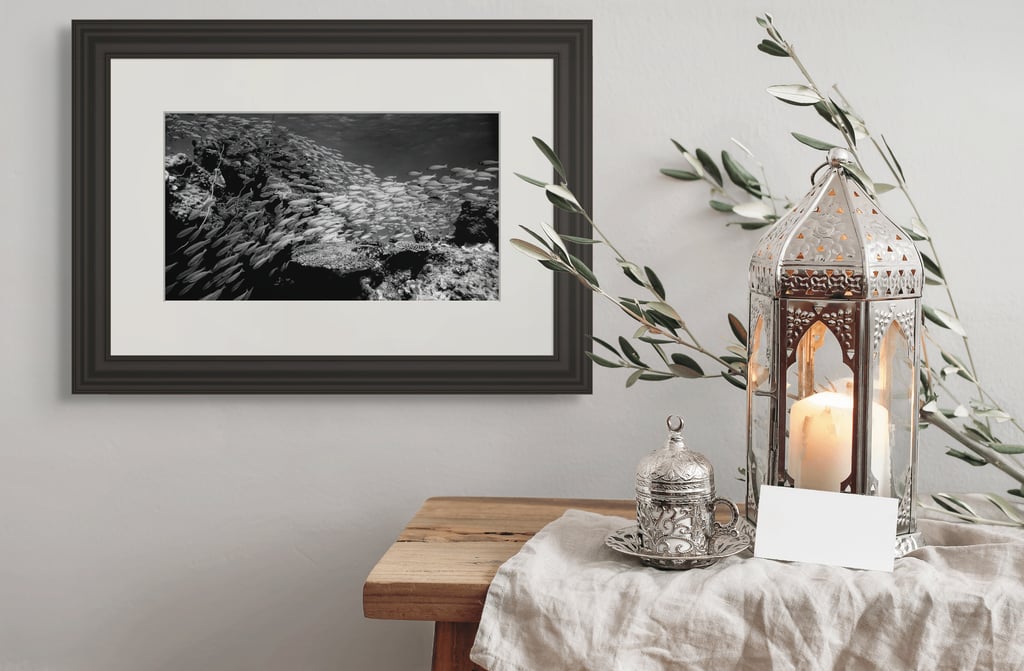
Black and White Ocean Prints. Removing colour fundamentally alters our perception. Suddenly, the focus shifts to form, texture, light, and shadow. The ripple patterns in sand resemble abstract art, while wave foam transforms into intricate lace. Black and white ocean photography exudes sophistication and timelessness, creating a gallery-quality feel that enhances any living room. Additionally, there is a meditative quality to monochrome seascapes; they invite contemplation rather than excitement.
Abstract Ocean Art. Imagine the blurred motion of waves, with intentional overexposure turning the water into pure light, or extreme close-ups that transform the ocean into unrecognizable patterns. Abstract ocean art focuses on evoking emotion rather than representing reality. It is ideal for spaces where you want to inspire creativity, encourage conversation, or evoke a feeling that’s hard to define.
Vintage Coastal Photography. Weathered piers, old lifeguard stations, and faded beach umbrellas create vintage coastal prints that evoke narrative and nostalgia. These prints work exceptionally well in spaces adorned with reclaimed wood, leather furniture, or antique accents, adding layers of history and storytelling.
Consider the emotional atmosphere you want to establish. Calm, glassy waters bathed in soft morning light can create a sense of sanctuary, while dramatic storm waves against dark skies can inject energy and power. Golden hour beaches radiate warmth and optimism. The intended purpose of your living room—whether it serves as a retreat for quiet evenings, a gathering space for friends, or a backdrop for working from home—should guide your choice of mood.
Material Quality and Presentation: Where Art Becomes Heirloom
Here's a harsh reality about wall art: most prints you see are made quickly, inexpensively, and with materials that can fade, yellow, or deteriorate within just a few years. The distinction between commodity prints and fine art prints is significant and noticeable.
Giclée Printing on Archival Paper. At WallArtsy, we utilize giclée printing on Hahnemühle photo rag paper, and this is more than just technical jargon, it's the distinction between a mere print and a true investment. Giclée, which means "to spray" in French, employs microscopic droplets of archival pigment inks, resulting in colour accuracy and tonal range that far surpasses standard printing methods. Hahnemühle paper, made from 100% cotton rag, features a subtle texture that adds depth while ensuring your print will not fade or yellow for over 100 years when stored properly.
The Framing and Matting Conversation. The way you present your ocean art is just as important as the artwork itself.
Matting provides breathing room for the piece. A generous mat (around 3 to 4 inches on all sides) surrounding your ocean print directs the viewer's attention inward, creating a gallery-like experience. This approach adds a sense of formality and encourages contemplation. In more casual spaces, you can either forgo the mat or use minimal matting (1 to 2 inches) to make the image feel more immediate and inviting.
The style of the frame also communicates personality. Thin black metal frames convey contemporary minimalism, allowing the art to take center stage. Wide white mats in white frames create a bright, airy coastal ambiance. Natural wood frames, especially in light oak or driftwood finishes, bring warmth and organic texture that beautifully complements ocean imagery. Meanwhile, darker woods like walnut add richness and sophistication, making them ideal for dramatic seascapes or black-and-white prints.
Float mounting and acrylic face mounting are both premium options worth considering for showcasing statement pieces. Float mounting slightly elevates the print away from the backing, creating a subtle shadow depth. On the other hand, acrylic face mounting encases the print behind crystal-clear acrylic, which intensifies the colours and creates a luminous, high-end gallery effect.
When choosing your presentation style, it’s important to ensure it harmonizes with both the artwork and the overall aesthetic of your living room. A minimalist space may benefit from frameless mounting or the thinnest possible frame, while a more traditional room might embrace ornate frames with substantial mats.
Integrating Ocean Art Into Your Living Room Design
You've chosen the perfect piece. Now comes the art of integration: making your ocean wall art feel like it belongs, like it's always been there.
Colour Coordination Without Matching. You don’t need to match the colours of your artwork exactly to your décor, in fact, it’s better if you don’t. Instead, choose one or two accent colours from the print and incorporate them subtly through throw pillows, a blanket, or decorative objects. For example, if your ocean print features deep navy and white foam, consider using navy velvet pillows or a white ceramic vase nearby. This approach creates a harmonious dialogue between the elements without appearing overly coordinated.
Texture Layering. Ocean prints, particularly when printed professionally, possess a unique texture. You can enhance this feature by adding complementary textures to your space, such as chunky knit throws, jute or sisal rugs, linen upholstery, raw wood coffee tables, and woven baskets. These organic textures contribute to a tactile richness that makes the room feel more inviting and thoughtfully designed.
Lighting Strategy. Natural light enhances your artwork, so place ocean art where it can be illuminated by daylight. However, try to avoid direct sunlight, as it may lead to long-term fading, although high-quality archival prints are more resistant to this issue. For evening ambiance, consider using picture lights or adjustable spotlights to highlight your artwork without overwhelming it. Warm LED bulbs (2700 to 3000K) provide an inviting glow, while cooler bulbs (4000K+) enhance blues and clarity.
The Power of Negative Space. If you have invested in a significant piece of ocean-themed wall art, allow it space to shine. Avoid the temptation to place additional artwork beside it, hang shelves in the vicinity, or clutter the area with other decorations. Keep the wall surrounding your ocean print relatively open. This negative space enhances the visual impact of the artwork and fosters a sense of calm sophistication.
Furniture Placement. To create a comfortable viewing experience of your ocean art, arrange your sofa or chairs to provide a clear and unobstructed view of the piece from where people typically sit. The artwork should be an integral part of the room’s conversation, rather than an afterthought.
Common Mistakes to Avoid
Hanging too high. This is the most frequent error. If you feel like you're looking up at your art, it's too high.
Going too small. When in doubt, size up. Undersized art looks unintentional and gets lost on the wall.
Mixing too many styles. If you're creating a gallery wall, maintain a consistent style thread, all black and white, all abstract, or all photographic realism. Mixing styles randomly creates visual chaos.
Ignoring your room's colour temperature. Cool-toned rooms (grays, blues, and whites) naturally pair with most ocean art. Warm-toned rooms (beiges, creams, and warm woods) benefit from ocean prints that feature warmer light, such as golden hour beaches and sunset seascapes.
Choosing a print you don't genuinely love. Design rules are helpful, but if a piece doesn't speak to you emotionally, it won't work. You'll see this art daily: make sure it brings you joy.
Making Your Choice
Choosing ocean wall art for your living room is both a practical decision and a personal expression. To help guide your selection, consider the following questions:
- What atmosphere do I want to create when I enter this room?
- What size art piece fits well with my wall and furniture proportions?
- Do I prefer the boldness of colour or the sophistication of black and white?
- How much am I willing to invest in terms of quality and presentation?
Answering these questions will help narrow down your options, making the selection process less overwhelming and more enjoyable.
At WallArtsy, we have carefully curated a collection that celebrates the ocean's complexity. Our selection ranges from serene coastal scenes to powerful underwater perspectives, capturing everything from intimate wave details to expansive seascapes. Each print is produced with archival materials, ensuring that what you hang today will remain stunning for generations to come
Your living room is a space where life unfolds: where you unwind after long days, engage in conversations, and enjoy quiet moments of reflection. Ocean-inspired wall art not only decorates this space but also enhances its overall ambience, creating an environment that nurtures rather than drains.
The ocean has always represented transformation, perspective, and renewal. Bringing elements of it into your home invites that energy into your daily life.
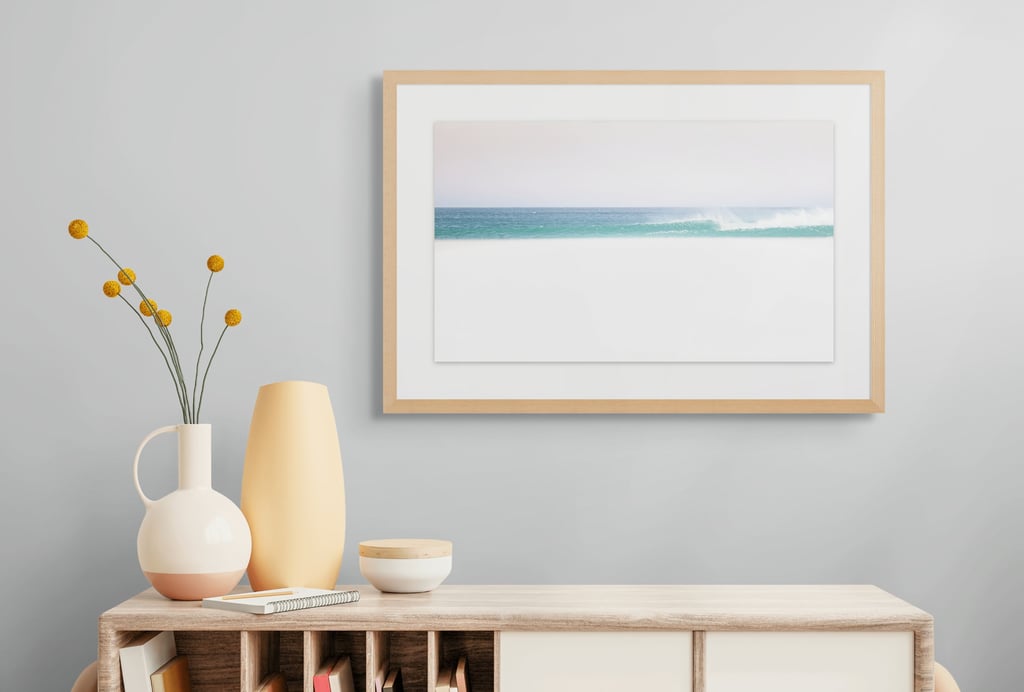

A minimalist ocean horizon print in a natural wood frame with generous white matting creates a serene focal point. Note how the artwork spans roughly two-thirds the width of the console below, following the proportional balance rule for proper visual impact.
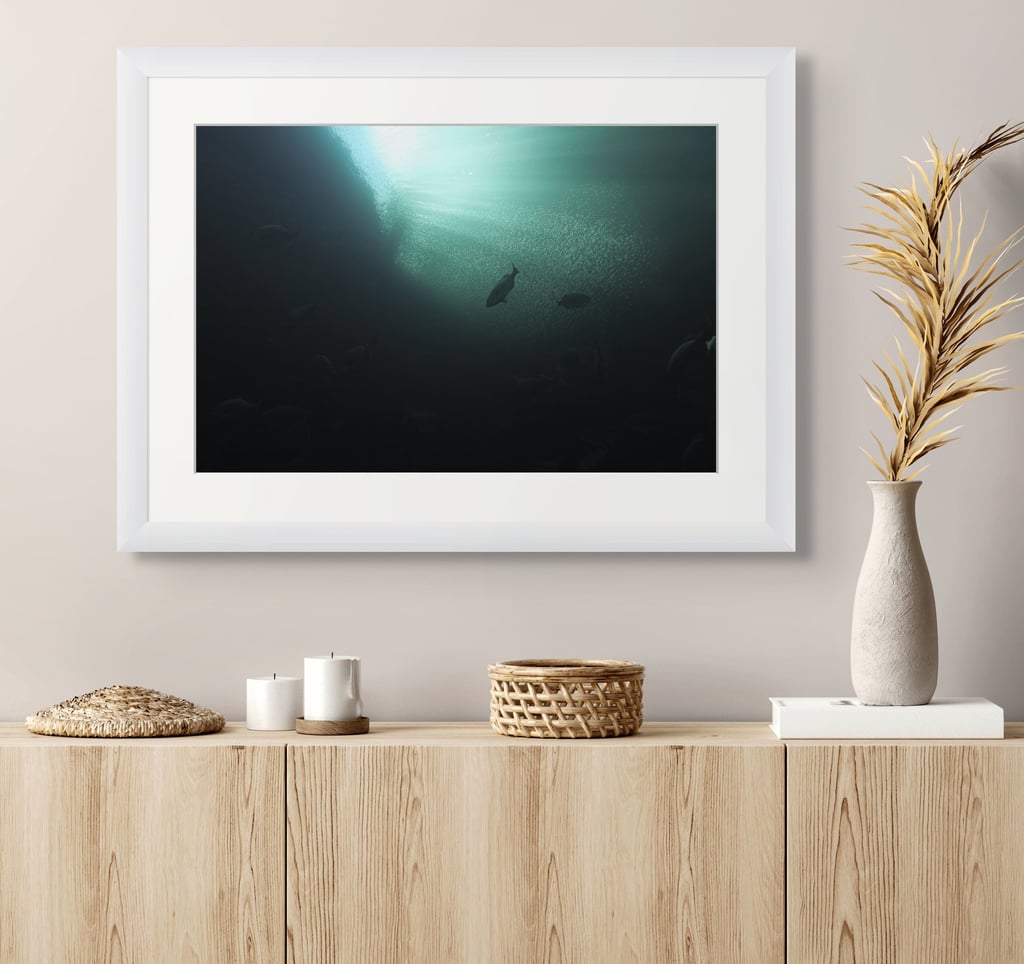
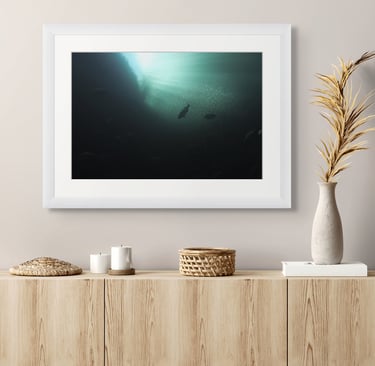
Underwater photography in a white frame with minimal matting demonstrates how dramatic ocean imagery works in contemporary spaces. The deep teal tones complement natural wood furniture while the white frame keeps the mood light and airy, perfect for smaller living rooms that need depth without darkness.
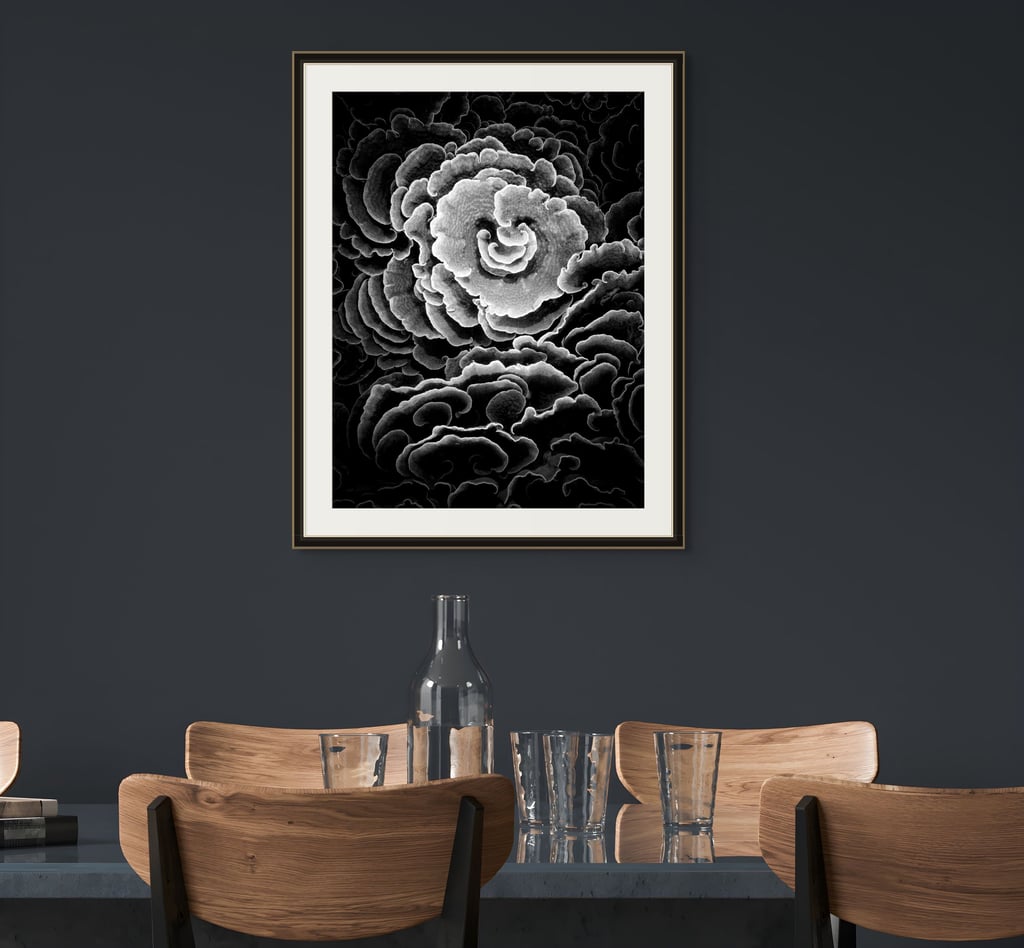
Black and white ocean coral photography in a thin metallic frame with substantial matting showcases the power of monochrome marine art. Against a dark wall, the generous white mat creates breathing room and draws the eye inward, while the sophisticated frame adds gallery-quality elegance ideal for modern or transitional dining and living spaces